What Is a PayMyEvery Skill-Based Competition
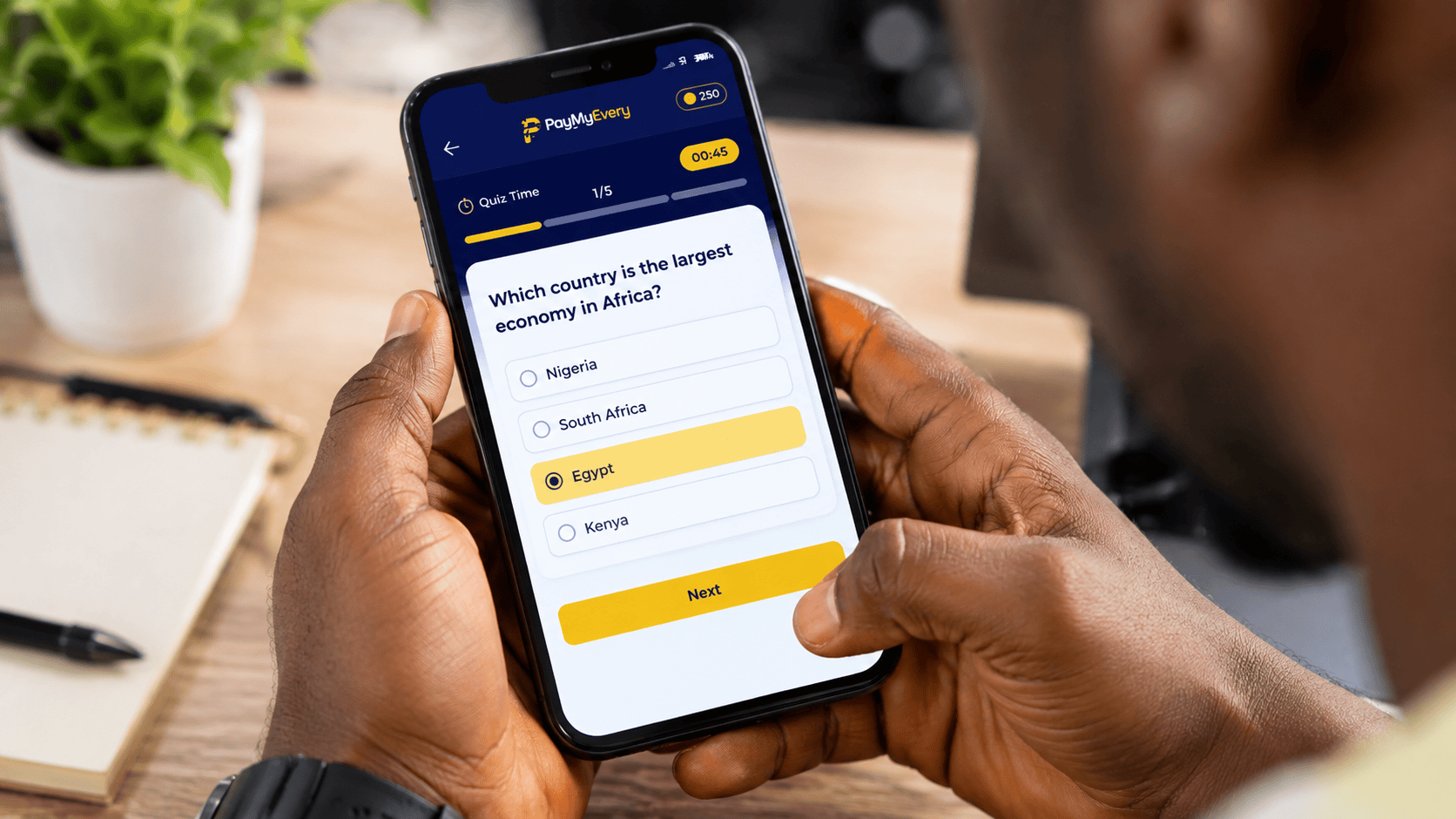
A PayMyEvery skill-based competition is a mobile
quiz experience in which participants answer multiple-choice questions and are
ranked according to their performance. Unlike a lucky draw, where selection
depends on chance, PayMyEvery describes its competitions as being based on
knowledge, accuracy and speed.
The concept is easy to understand:
Knowledge → Questions → Accuracy → Speed → Ranking
Participants use what they know to answer the questions. Correct answers
determine the primary level of performance, while completion time may become
important when participants achieve the same score.
PayMyEvery connects these competitions with practical support categories such
as groceries, rent and school fees. According to the platform’s published
information, eligible prizes are directed to relevant approved providers or
recipients rather than paid as unrestricted cash to the participant.
This model creates an interesting connection between digital participation and
everyday needs. Instead of treating a quiz as entertainment alone, PayMyEvery
presents knowledge-based competition as a possible route to practical support.
Understanding the PayMyEvery
Competition Concept
Knowledge is useful in many parts of life. It can help someone make
better decisions, understand opportunities, solve problems and develop
professional confidence. In a competition setting, knowledge becomes something
participants can actively apply.
PayMyEvery’s model is built around that application. Users do not simply wait
for a random result. They read questions, consider possible answers and try to
perform better within the time allowed by the relevant competition rules.
Imagine a classroom challenge with a digital leaderboard. Knowing the subject
is important, but following the instructions and managing the clock also
matter. That is the basic character of a PayMyEvery skill-based competition.
Skill-Based
Versus Luck-Based Participation
The difference between skill and luck is central to understanding how
PayMyEvery describes its platform.
In a luck-based draw, a participant may have the same chance of being selected
as another participant, regardless of how much they know. In a skill-based
quiz, performance is connected to the answers given. Participants have an
active role because they can rely on preparation, general knowledge,
concentration and decision-making.
PayMyEvery states that its competitions do not use random draws or lucky
selections. Instead, participants are ranked according to the number of correct
answers and, where necessary, the time taken to complete the quiz.
This does not mean that every participant will win. It means the competition is
structured around performance. Users should still read the rules for each
competition because entry conditions, eligibility and prize arrangements can
vary.
The competition formula can be broken down into five stages:
1. Knowledge: You bring your existing knowledge and
preparation.
2. Questions: The platform presents multiple-choice
questions.
3. Accuracy: Your correct answers determine your
primary score.
4. Speed: Completion time may separate participants
with similar scores.
5. Ranking: The automated process places participants
according to the applicable rules.
This structure rewards careful thinking, but it also makes time management
relevant. The goal is not simply to rush. It is to answer correctly and work
efficiently.
Who
Can Participate in PayMyEvery Competitions?
PayMyEvery’s published information states that participation is for
people aged 18 and over. This age requirement
is important for anyone considering registration or entry into a competition.
Users should also review any additional eligibility conditions shown on the
individual competition page. Requirements may relate to location, account
status, entry timing, payment confirmation or other conditions specified by
PayMyEvery.
Never assume that being able to access a competition automatically means you
qualify for every prize. The eligibility information connected to the specific
competition should always be treated as the final reference.
How
to Create a PayMyEvery Account
The first step is creating a PayMyEvery account. Registration gives
users access to the platform’s available competitions and account-related
features.
According to PayMyEvery’s website, registration may require basic details such
as or facebook/Google login:
- Full name
- Email address
- State (optional)
- Phone number
- Password
Use accurate information when registering. Correct details can make account
management and winner verification easier if you later qualify for a prize. You
should also create a strong, unique password and keep it private.
As with any online service, do not share your password, payment information or
security codes with another person. If you receive a suspicious message
claiming to represent PayMyEvery, verify it through the platform’s official
support channels before responding.
How
to Choose a PayMyEvery Competition
Once your account is ready, you can view the competitions currently
available. The platform describes categories connected to common expenses,
including groceries, rent and tuition or school fees.
Each category may appeal to users for a different reason. Someone managing
household food costs may be interested in a grocery-related competition. A
tenant may pay closer attention to a rent competition, while a parent or
student may look for an education-related opportunity.
Availability is not necessarily permanent. Competitions may open and close at
different times, and their entry fees, prize information, eligibility
conditions and closing dates may differ. Always check the individual
competition page rather than relying on an old description or social media
post.
Groceries,
Rent and School Fees
Connecting competition categories with everyday expenses is one of
PayMyEvery’s defining ideas.
Groceries: Food and household essentials are
recurring costs for many Nigerian families. A grocery-related reward is
designed around practical items rather than a purely virtual benefit.
Rent: Accommodation is one of the largest
financial responsibilities a person may face. A rent-related competition may involve
payment to a landlord, property owner or approved letting agency, subject to
the applicable rules.
School fees: Education expenses can include
tuition and other approved charges. A school-fee-related prize may be directed
to an approved educational institution or recipient instead of being
transferred as cash to the winner
Connecting competition categories with everyday expenses is one of
PayMyEvery’s defining ideas.
Groceries: Food and household essentials are
recurring costs for many Nigerian families. A grocery-related reward is
designed around practical items rather than a purely virtual benefit.
Rent: Accommodation is one of the largest
financial responsibilities a person may face. A rent-related competition may involve
payment to a landlord, property owner or approved letting agency, subject to
the applicable rules.
School fees: Education expenses can include
tuition and other approved charges. A school-fee-related prize may be directed
to an approved educational institution or recipient instead of being
transferred to the winner as cash.
Suggested Internal Links
- PayMyEvery — How It Works
- PayMyEvery — FAQ
- PayMyEvery — Help & Support
- PayMyEvery — Competition Rules & Details

